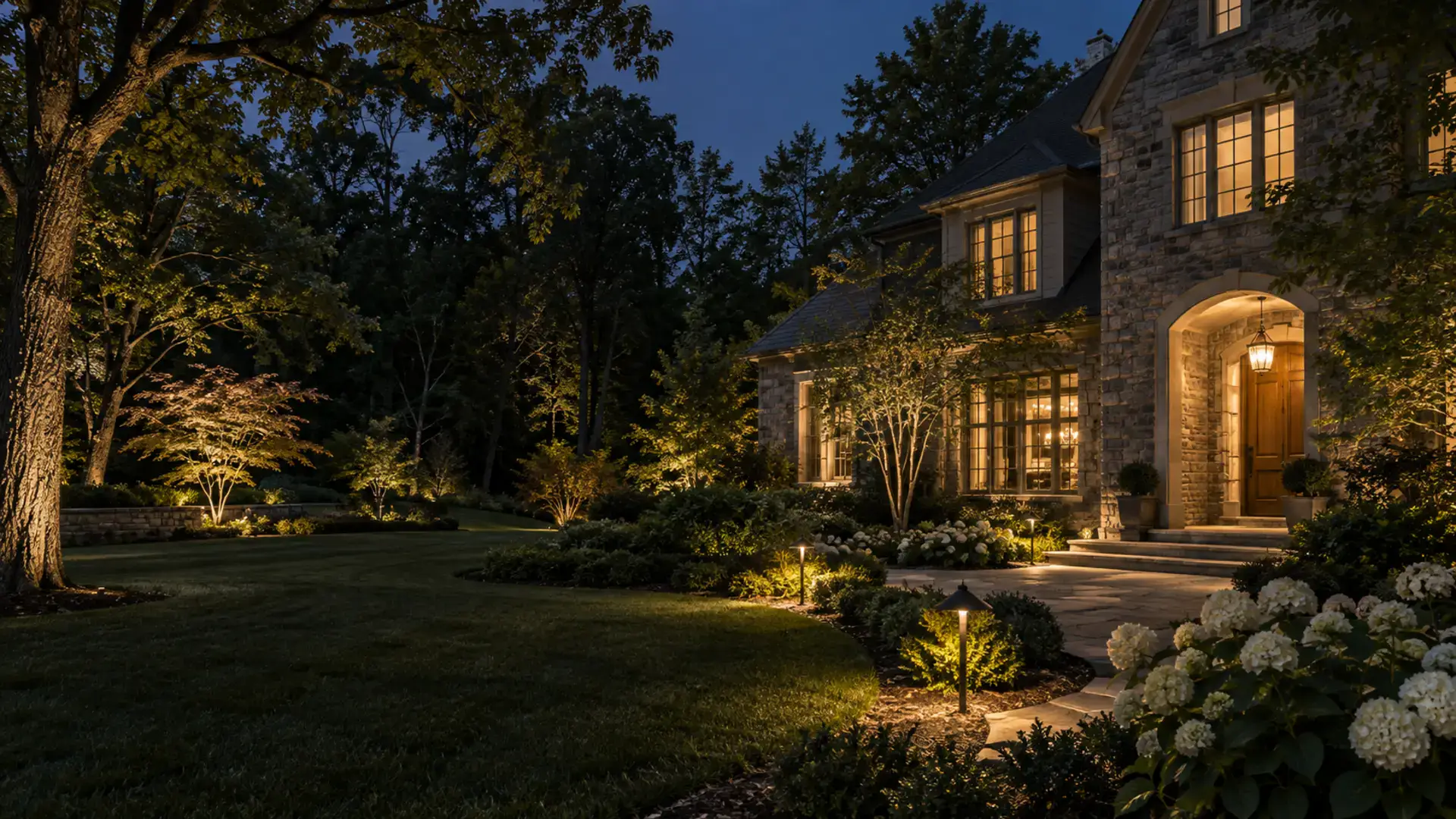
LED Landscape Lighting Richmond VA
Thoughtful fixtures, controlled optics and warm light—planned around the architecture, pathways, trees and outdoor spaces of your Richmond-area home.

Start With the Right LED Fixture
Effective landscape lighting begins with equipment suited to the intended effect and installation environment. Housing, optics, shielding, output, beam spread and aiming all influence the finished result.
We consider the feature being illuminated, viewing position, surrounding landscape and exposure conditions before determining how a fixture should be selected and positioned.
The image illustrates a fixture style rather than a specified product. Final equipment selections are based on the individual property and approved project scope.
Warm Light Without the Harsh Look
For many residential properties, 2700K produces a warm-white appearance that works comfortably with brick, stone, wood and natural planting.
Kelvin describes the color appearance of light—not brightness. Output, beam shape, distance, placement and aiming must still be selected for each application.
- Coordinate color temperature with porch and building-mounted lighting.
- Match output and beam spread to the size and distance of the target.
- Use shielding and aiming to help control glare and spill.


Match the Beam to the Tree
Trees can become some of the most dramatic elements in a residential lighting plan. Trunk shape, canopy width, branching structure and the primary viewing position all influence placement.
Narrower or broader optics can be selected to reveal the intended portion of the tree while careful aiming helps limit unnecessary spill beyond the feature.
- Trunk and branching structure
- Canopy width and mature size
- Primary viewing directions
- Nearby windows and property boundaries
Reveal Architectural Texture
LED landscape fixtures can highlight brick walls, columns, entries and other exterior surfaces. Fixture distance, beam spread and output determine how light travels across masonry and architectural detail.
We consider the surface being illuminated together with rooflines, windows, landscaping and important viewing angles from the street and inside the home.


Keep the Light on the Route
Paths, steps and transitions between outdoor spaces require deliberate placement. Shielded fixtures can direct illumination toward walking surfaces from adjacent planting beds.
Locations should account for foot traffic, grade changes, glare and how the path is viewed from the home and street. The goal is useful illumination without creating a row of distracting bright points.
Why Homeowners Choose LED Landscape Lighting
LED technology supports efficient operation and precise lighting effects, but good results still depend on fixture quality, system compatibility and thoughtful design.
Lower System Input
LED equipment can produce useful illumination with relatively low electrical input compared with many older lighting technologies. Actual use depends on the proposed load and operating schedule.
Purposeful Optics
Different beam spreads, outputs and shielding options make it possible to shape light for trees, paths, walls and architectural details.
Warm Residential Light
Warm-white LED options can complement residential materials and landscapes without creating an overly cool or commercial appearance.
Planned Operation
Compatible timers, photocells and other controls can keep the system operating on an intentional schedule.
Serviceable Design
Accessible connections, suitable equipment and clear system planning make future adjustment and maintenance more manageable.
One Complete System
Path, tree, architectural and outdoor living fixtures can be planned together instead of treated as unrelated additions.
LED Fixtures Are Only Part of the Result
Fixture specifications matter, but placement, sightlines and relationships between illuminated features determine whether a property feels balanced after dark.
A site-specific design helps address common problems such as glare, hot spots, uneven brightness, mismatched color and lighting that competes with the architecture.
Explore Landscape Lighting DesignPlan the complete system
A dependable proposal should account for fixture construction, output, optics, transformer capacity, voltage, wire routing, controls, connections and final nighttime aiming.
Existing systems require an individual compatibility review before fixtures or lamps are converted.
Our LED Landscape Lighting Process
The process keeps equipment choices connected to the property, intended effects and the way you use your home after sunset.
- 01
Consultation
Discuss the property, priorities, existing system and evening routines.
- 02
Design
Plan effects, fixture locations, optics, controls and system requirements.
- 03
Proposal
Review the proposed equipment, scope and installation details.
- 04
Installation
Coordinate fixtures, wiring, transformer and controls with the landscape.
- 05
Adjustment
Aim and refine the fixtures to produce the intended nighttime appearance.
LED Landscape Lighting for Richmond-Area Homes
Landscape Science plans residential systems around each property's architecture, landscape, existing infrastructure and site conditions. Contact us to confirm availability for your address and project scope.
- Richmond
- Glen Allen
- Henrico
- Short Pump
- Wyndham
- Twin Hickory
Explore Your Lighting and Landscape Options
LED technology can support a focused landscape-lighting project or a broader plan covering the home, arrival areas and outdoor living spaces.
Landscape Lighting
Explore complete lighting design for trees, planting, pathways, architecture and outdoor living spaces.
Explore landscape lighting →Outdoor Lighting
Connect entrances, driveways, architecture, patios and the rest of the residential property.
Explore outdoor lighting →Landscape Design
Coordinate planting, hardscape, outdoor living improvements and lighting through one property-wide plan.
Explore landscape design →LED Landscape Lighting Questions
What is LED landscape lighting?
It uses light-emitting diode technology in outdoor fixtures designed for pathways, planting, trees and architecture. Fixture construction, optics, placement, power supply and installation design all affect system performance.
Is LED landscape lighting a good option for Richmond homes?
LED fixtures are commonly used for residential systems because they can provide controlled outdoor illumination with relatively low electrical input. The appropriate design depends on the property, desired effects, equipment and operating schedule.
Does 2700K mean the light is brighter?
No. Kelvin describes color appearance. Brightness and the amount of light reaching a surface depend on output, optics, distance and aiming. A 2700K fixture has a warm-white appearance.
How much electricity will an LED system use?
Energy use depends on total system input wattage and operating hours. Review the proposed load and schedule rather than assuming a fixed saving without a comparable baseline.
How long do LED landscape fixtures last?
Rated life and warranty depend on the selected product. Drivers, seals, connections, heat management and operating conditions also matter. Manufacturer specifications should be reviewed during equipment selection.
Can an existing landscape-lighting system be upgraded to LED?
Possibly. Transformer capacity, voltage, wiring, controls and lamp or fixture compatibility must be checked before a conversion is specified. Existing systems should be evaluated individually.
Plan Your Residential LED Lighting System
Create a warm, carefully controlled nighttime environment with equipment and placement selected around your property.